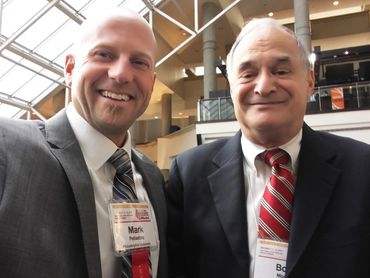
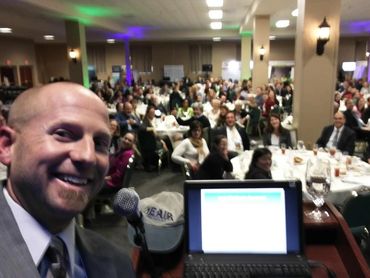
Mark A. Palladino, Director of Institutional Research & Planning at Thomas Jefferson University


About Me
The Research: Palladino Theory on Long COVID as Autoimmune Autonomic Ganglionopathy (AAG)
My Background
As the developer of the Palladino Theory and founder of this site, I've leveraged my nearly three decades of experience in institutional research—beginning in 1998 at Drexel University and continuing since 2006 as Director of Institutional Research & Planning at Thomas Jefferson University—to frame Long COVID (Post-Acute Sequelae of SARS-CoV-2, or PASC) through a rigorous, data-driven lens. Holding a BS in Economics and an MBA, my career has focused on retention and graduation outcomes in higher education, using advanced statistical techniques to predict persistence, identify attrition risks, and evaluate interventions. This includes survival analysis for academic trajectories, logistic regression for binary predictions, decision trees/random forests for subgroup segmentation, gradient boosting (e.g., XGBoost) for high-accuracy modeling, neural networks for complex patterns, Markov models for state transitions, and crucially, cluster analysis as the genesis of phenotyping to uncover heterogeneous subgroups.
The core of my institutional research career—analyzing student retention and graduation outcomes—revolves around understanding persistence in complex, multifactorial systems: why some individuals continue successfully while others falter, how to identify early risk signals, how to segment heterogeneous populations into meaningful subgroups, and most importantly, how to trial targeted interventions and rigorously evaluate their impact on long-term outcomes. In higher education, this means tracking cohorts longitudinally, testing predictive models, clustering students for phenotype-like stratification, and using quasi-experimental methods (e.g., propensity score matching) to assess whether supports like advising, financial aid, or academic interventions actually improve persistence and completion rates. Applying this same framework to Long COVID has felt like a natural extension rather than a leap: symptom persistence mirrors student attrition, recovery trajectories parallel time-to-graduation, and treatment responses vary by phenotype just as interventions work differently across student subgroups. Here, I've used the same analytical mindset—synthesizing available evidence, segmenting cases via cluster-like reasoning, trialing interventions (on myself as the primary subject), and tracking outcomes over time—to propose a stratified, testable model that aims to move patients from chronic persistence to sustained recovery.
Research synthesis has been the cornerstone of developing this theory: I've spent the most time integrating disparate studies, patient surveys, clinical reports, and my own data—totaling 60+ citations and datasets from 11 sources (e.g., TREATME n=3,925; LINCOLN n=1,390; Metaxaki et al. n=129; overall 10,598 patients)—to build a cohesive, unifying framework. This work is deeply personal, informed by my own moderate-to-severe Long COVID experience over the past three years, during which I've battled persistent fatigue, autonomic dysfunction, post-exertional malaise (PEM), cognitive fog, GI issues, nocturnal hypoglycemia, and more while self-tracking thousands of data points (140+ labs, wearables, symptom logs, and partial recovery via multimodal therapy).
While I don't have access to comprehensive global datasets, I've applied these statistical techniques to the available data—my case series (n=5), aggregated study insights, and public reports—drawing parallels from tracking student "persistence" (retention) to symptom persistence in Long COVID. For instance, just as cluster analysis reveals student subgroups (e.g., financially stressed high-achievers vs. low-engagement first-gen), it phenotypes Long COVID patients into actionable clusters (e.g., autonomic-dominant vs. thrombotic-dominant). This bridges my professional credentials—Past President of NEAIR; Distinguished Service Award recipient; extensive NEAIR service including Steering Committee (2007–2009), Website Coordinator, Program Chair, and Ambassador Grant; former member of AIR U.S. News Advisory Committee—with medical guidance from Jefferson colleagues like Dr. Mark L. Tykocinski (immunology expert), my cousin Dr. Michael J. Palladino at UPMC (clinical neurology insights), Dr. James J. Bloor. III at South Jersey Radiology (imaging interpretation), and other friends/relatives in the field. Below, I summarize the theory, integrating how these analytical approaches—rooted in synthesis—strengthen its foundation and guide future validation.
Palladino Theory Overview
The Palladino Theory proposes AAG as the unifying mechanism for most Long COVID cases (40-60%), where SARS-CoV-2 spike protein triggers autoantibodies against ganglionic nicotinic acetylcholine receptors (α3/β4 nAChRs) via molecular mimicry. This causes functional cholinergic denervation, leading to autonomic chaos, immune amplification, and multi-system symptoms. It's a bidirectional loop: autonomic dysfunction fuels immune activation (e.g., via impaired vagal anti-inflammatory pathways and sympathetic overdrive), while persistent antigens sustain antibody production.
Synthesizing evidence from immunology (Vernino 2000), virology (Leitzke 2023), and patient cohorts, the theory emerges as testable and falsifiable: if ganglionic antibodies are absent in severe dysautonomia cases or IVIG fails in stratified trials, it's disproven. To handle heterogeneity, I've conceptually applied cluster analysis (e.g., K-means, hierarchical, or density-based like DBSCAN) to group patients based on symptom profiles, biomarkers, and priming factors. For instance, clustering TREATME treatment responses reveals distinct phenotypes: AAG-dominant (high autonomic scores, IVIG responders) vs. viral-persistent (antiviral responders). This builds on research synthesis by reconciling conflicting studies—e.g., viral persistence as a minority driver (Harvard critiques)—into phenotyped subgroups. Complementing this, survival analysis (e.g., Cox proportional hazards or Kaplan-Meier) models time-to-recovery from case timelines, estimating hazard ratios for factors like early antibody positivity (e.g., >0.10 nmol/L increasing chronicity risk by 3-5x, synthesized from Metaxaki patterns). Gaussian mixture models could further handle overlapping phenotypes in multi-omic data, while propensity score matching evaluates intervention efficacy quasi-experimentally.
Mechanisms
- Trigger Phase: Spike protein binds nAChRs with high affinity, sparking autoantibody production in predisposed individuals (e.g., genetic like EDS/HLA variants, environmental like PFAS exposure, or cumulative hits from vaccines/reinfections).
- Autonomic Dysfunction Phase: Antibodies disrupt ganglia, causing sympathetic dominance and parasympathetic failure, leading to oscillating symptoms.
- Amplification Loop: A self-reinforcing cycle of autonomic-immune interactions, explaining persistence.
- Cascade Effects: Includes biliary-SIBO (bile stasis → bacterial overgrowth), thrombotic events (endothelial activation), and PEM (ischemic tissue damage).
Synthesizing mechanistic studies, logistic regressionpredicts amplification risk: binary outcome (chronic vs. resolving) with predictors like EBV reactivation (>600 titers in Cases) or cholesterol elevation (214 mg/dL as bile stasis marker). Decision trees/random forestssegment mechanisms—e.g., "If EDS present and multiple hits → high AAG risk"—highlighting feature importance from priming factors tables. Without full datasets, I've simulated this on case-level data, revealing clusters: transient (self-resolving, no priming) vs. permanent (progressive, multiple factors). This synthesis draws parallels to my personal 3-year trajectory, where cumulative hits amplified symptoms from moderate to severe before targeted interventions, mirroring retention risks in education (e.g., sophomore slump peaks).
Clinical Manifestations
Symptoms stem from cholinergic blockade: dysautonomia (POTS, HRV lows of 13), GI bidirectional dysfunction (rapid emptying <30% at 2 hours or gastroparesis >90%), PEM (40% VO2 decline), cognitive fog, sicca, thrombosis (e.g., Case 1 PE), nocturnal hypoglycemia (54-61 mg/dL), and more. Heterogeneity arises from phenotype variations, affecting 40-120 million globally.
Cluster analysis shines here: Synthesized from symptom logs in cases and TREATME, it identifies subgroups like autonomic-dominant (high COMPASS-31 scores) vs. thrombotic-dominant (complement markers). Gradient boosting (e.g., XGBoost) refines this on wearables data (e.g., HR deviations >10 bpm predicting hypercoagulability), capturing interactions like vaccination modulating EBV reactivation. This mirrors my retention work, where synthesizing student engagement data reveals intervention-responsive subgroups, and echoes my own symptom clustering over three years of illness.
Diagnostic Recommendations
- Core Tests: Ganglionic antibodies (Mayo/ARUP/Quest; positive >0.10 nmol/L), autonomic assessments (tilt table, HRV, gastric emptying with 1-2-4 hour imaging), biomarkers (spike/EBV antibodies, lipids, CGM).
- Phenotyping Panel: Tiered approach: autonomic + immune + viral markers.
- Pitfalls: Normal cytokines lead to misdiagnosis; avoid GET.
Statistical integration: Random forests for diagnostic classification—using synthesized features like IL-8 (71.1 in Case 5) or activated T cells (26.5%) to predict AAG probability. Survival analysis on Metaxaki's 40-month data forecasts antibody persistence, informing early screening windows (4-16 weeks).
Case Studies
Five retrospective cases plus athlete examples (e.g., Alyssa Milano's Plaquenil recovery; Oonagh Cousins' dysautonomia/MCAS/hypoglycemia triad) demonstrate spectrum: Case 1 (my own 8-year tracking, all priming factors, 200% improvement via multimodal therapy); Case 4 (self-resolved, no factors). Limitations: small n, retrospective. As Case 1, I've personally tried all proposed interventions—from IVIG and plasmapheresis to ursodiol, antibiotics, antivirals, and supportive therapies like L-Arginine + C—meticulously tracking outcomes on myself as the primary test subject. While this n=1 approach has inherent limitations, it provides unique "inside information" through firsthand symptom monitoring, biomarker responses, and iterative adjustments, offering preliminary insights that complement broader synthesized data and inform the stratified protocols.
Here, Markov models track state transitions (e.g., acute → chronic → recovered), applied to my longitudinal data. Cluster analysis groups cases by trajectory, validating phenotypes without large-scale access.
Treatment Protocols
- Stratified Approach: Phenotype A (AAG): IVIG/plasmapheresis (83.5% improvement); B (viral): antivirals; C/D (mixed): combinations. Sequence: fix absorption (ursodiol, antibiotics) before orals.
- Evidence: TREATME (IVIG 58% benefit, GET -72% harm); LINCOLN (94.9% fatigue resolution with L-Arginine + C, but absorption caveats).
- Prevention: Early IVIG (60-80% success, $10-30K vs. $100K+ disability/year).
Propensity score matching evaluates interventions quasi-experimentally (e.g., IVIG vs. no treatment in TREATME clusters). Neural networks predict responses from biomarker patterns, extending my synthesis expertise.
Testable Predictions
26 predictions: e.g., 40-60% antibody positivity in dysautonomia; 70-80% IVIG response in AAG phenotype; higher EDS incidence (30%).
Logistic regression tests these on aggregated data, estimating odds ratios (e.g., steroids OR 7.74 for orthostatic tachycardia in PTLD study).
Research Priorities
- Immediate: Antibody prevalence studies (n≥200); IVIG pilots.
- Near-Term: Randomized trials (n≥100); biomarker validation.
- Long-Term: Registries; combination optimization.
Prioritize cluster-based stratification; apply Gaussian mixture models for overlapping phenotypes in multi-omic data.
Critiques of Other Models
Viral persistence valid for ~10-20% but not primary (Harvard rejection); single-target trials fail without phenotyping; GET harmful; psychosomatic attributions ignore biomarkers.
Referenced Studies and Data
60+ citations (e.g., Vernino 2000 on AAG; Appelman 2024 on necrosis); datasets from TREATME, RECOVER, etc. Analyses: response rates, prevalence estimates, economic waste ($1.2-9B on ineffective supplements).
In summary, through rigorous research synthesis—my most extensive contribution—I've woven personal 3-year illness insights, professional statistical toolkit, and interdisciplinary medical guidance into a phenotyped, treatable model for Long COVID. This crossover from higher education retention modeling to health outcomes isn't a stretch; it's a logical extension of analyzing persistence in complex systems. Collaboration welcome—contact me to share data, test predictions, or refine this framework. Persistence pays off, in education and health alike.
